The Outdoor Guide to Lower Manhattan
Published 06/15/2021
The bottom tip of Manhattan is characterized by colossal skyscrapers and unparalleled views of the Hudson and East rivers. A beacon for tourists looking to dig into the City’s past, this area is a magical place for locals to visit as well. Here you can experience remnants of a forgotten Manhattan. In the Seaport District alone, the City’s oldest architectural landmarks sit among signs of urban renewal. The arrival of ships to Ellis Island and the immigrants they brought with them are immortalized here in granite and bronze
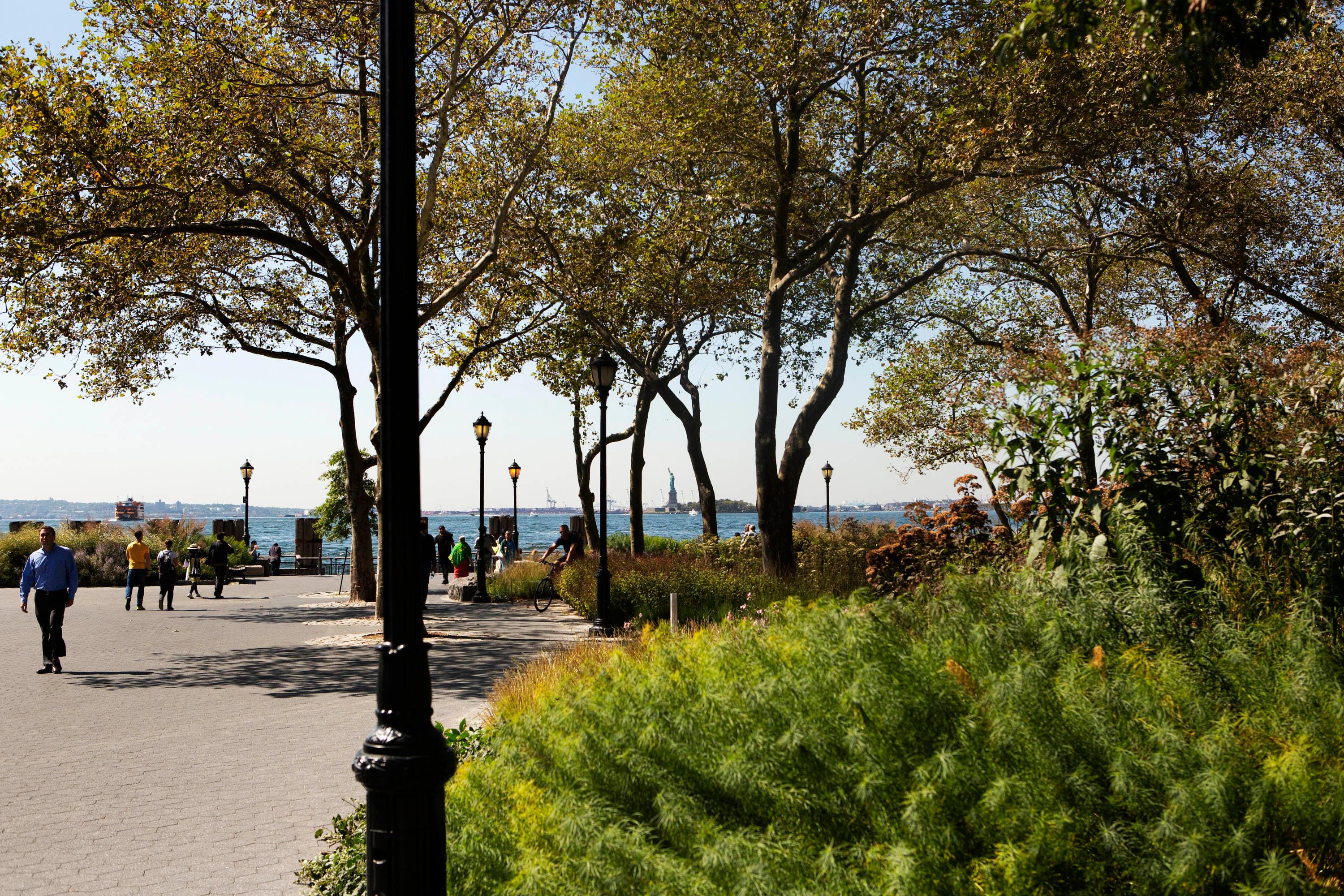
It’s always a good time to explore the neighborhood’s many parks and walkways. Learn about the history of Manhattan through public art, hang out in a scenic green space, see some public art and fall in love with the City all over again.
1
Brookfield Place
1
230 Vesey St.
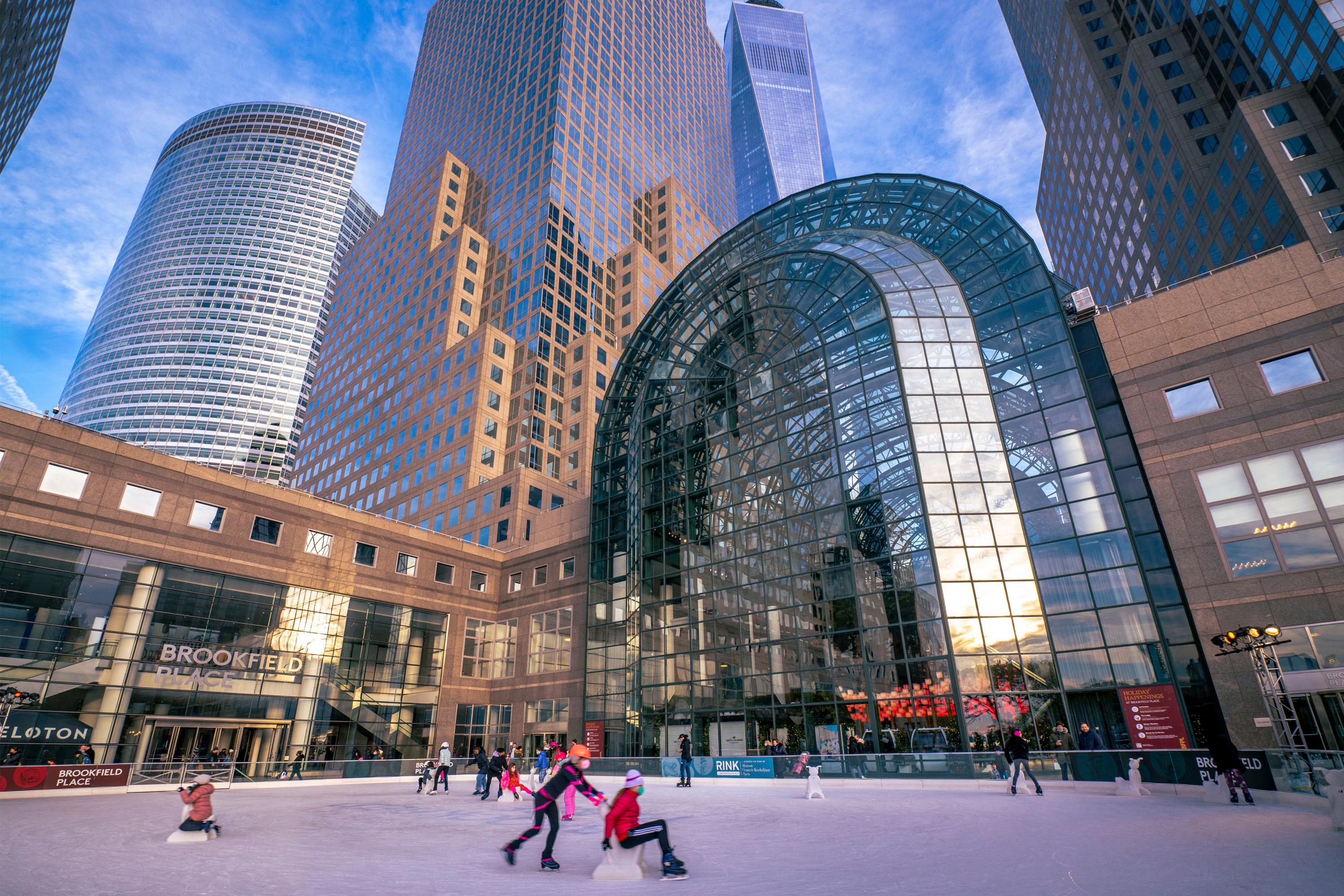
On the western side of the tip of Lower Manhattan is Brookfield Place, an upscale shopping, dining and cultural center spanning 14 acres alongside the Hudson River. It hosts art exhibits and trivia nights and is right by some prime waterfront viewing spaces.

2
Seaport District
2
19 Fulton St.
In the 1860s, the seaport became a major commercial hub. Today the neighborhood—marked by the Titanic Memorial Lighthouse—combines historic architecture, such as the block of houses on Schermerhorn Row, with retailers and restaurants. The South Street Seaport Museum pays homage to the district’s former life as a busy port, and passersby can take tours of 19th-century ships docked in the harbor.

3
Pier 15 and East River Waterfront Esplanade
3
78 South St.
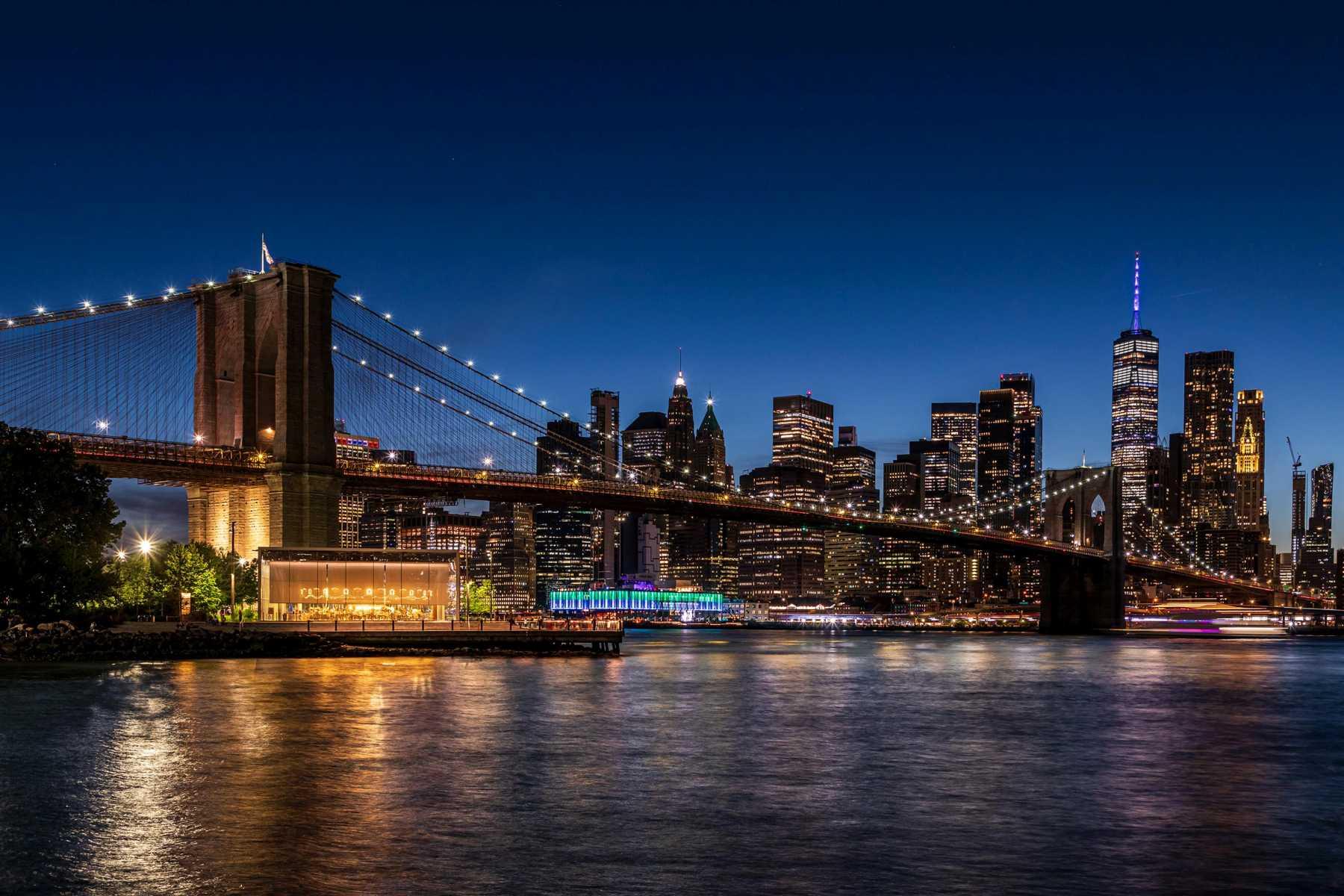
For the best views of the Brooklyn Bridge, head to Pier 15. The pier and esplanade jut out over the East River, and there is plenty of seating from which you can watch ferries dock and depart. Industry Kitchen has opened up an outdoor dining space right on the pier (and has indoor dining as well). The waterfront runs all the way from the Battery north to Montgomery Street and features a bike path that’s lighted 24 hours a day.
4
Memorials and Monuments
4
290 Broadway
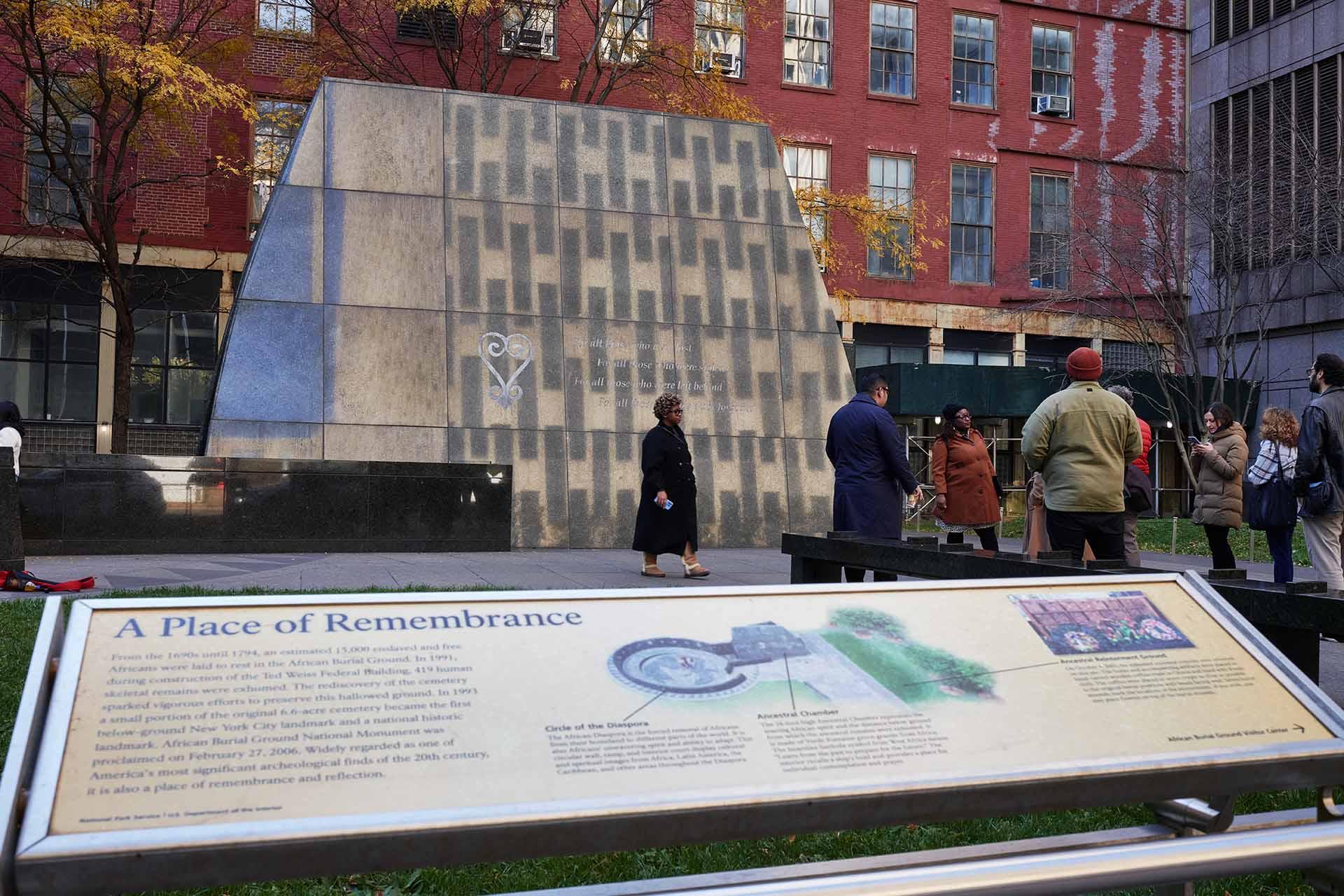
A tour through Lower Manhattan means a crash course in history, not just of NYC but globally. On Vesey Street in the North End of Battery Park City is the Irish Hunger Memorial, honoring the 1.5 million lives lost during the Great Irish Hunger from 1845 to 1852. The African Burial Ground National Monument, recognized as a US National Park, is an excavated burial ground of free and enslaved Africans. The largest known of these burial grounds in North America, the site highlights the role of slavery in the City’s evolution and honors those buried here. The memorial is also included as a stop on Inside Out Tours’ NYC Slavery & the Underground Railroad Walking Tour, which is currently running.

5
The Battery
5
New York
Spanning 25 acres, this public green space predates Central Park. The edge of the park provides a perfect vantage point to spot Lady Liberty, and it’s also where you can catch a sightseeing cruise ship to Liberty Island. To buy tickets, head inside the historic Castle Clinton, built from 1808 to 1811 and a historic site in itself. The space was armed with cannons during the War of 1812, and it was later repurposed as a theater and opera house, and later still as an aquarium that housed a beluga whale. Free summer concerts are held in Wagner Park.

6
Wall Street
6
Wall St.
Wall Street has come to stand for New York City’s financial district as a whole. It’s where you can find one of the world’s largest stock exchanges, the New York Stock Exchange, also one of the world’s most-photographed buildings. You can watch the stock market (digital) ticker tape scroll on the outside of the building, though you can’t actually enter the building itself. The narrow eight-block street is lined with towering buildings and worth a stroll through, if only to marvel at its movie- set-like feel, culminating in a striking view of Trinity Church at the top. Wall Street also has a dark past, marked by a small plaque at 74 Wall Street: the site of a former auction block for the sale and trade of enslaved Africans (the actual site is one block West of the plaque). Black Gotham Experience offers tours of the area, illuminating the often-omitted history of Black people in Lower Manhattan, and sheds light on New York's past as a center of slavery. Kamau Ware, founder of the Black Gotham Experience, is penning a series for the Downtown Alliance on New York City's origin as it relates to the English Slave Trade.
7
Trinity Church and Cemetery
7
89 Broadway
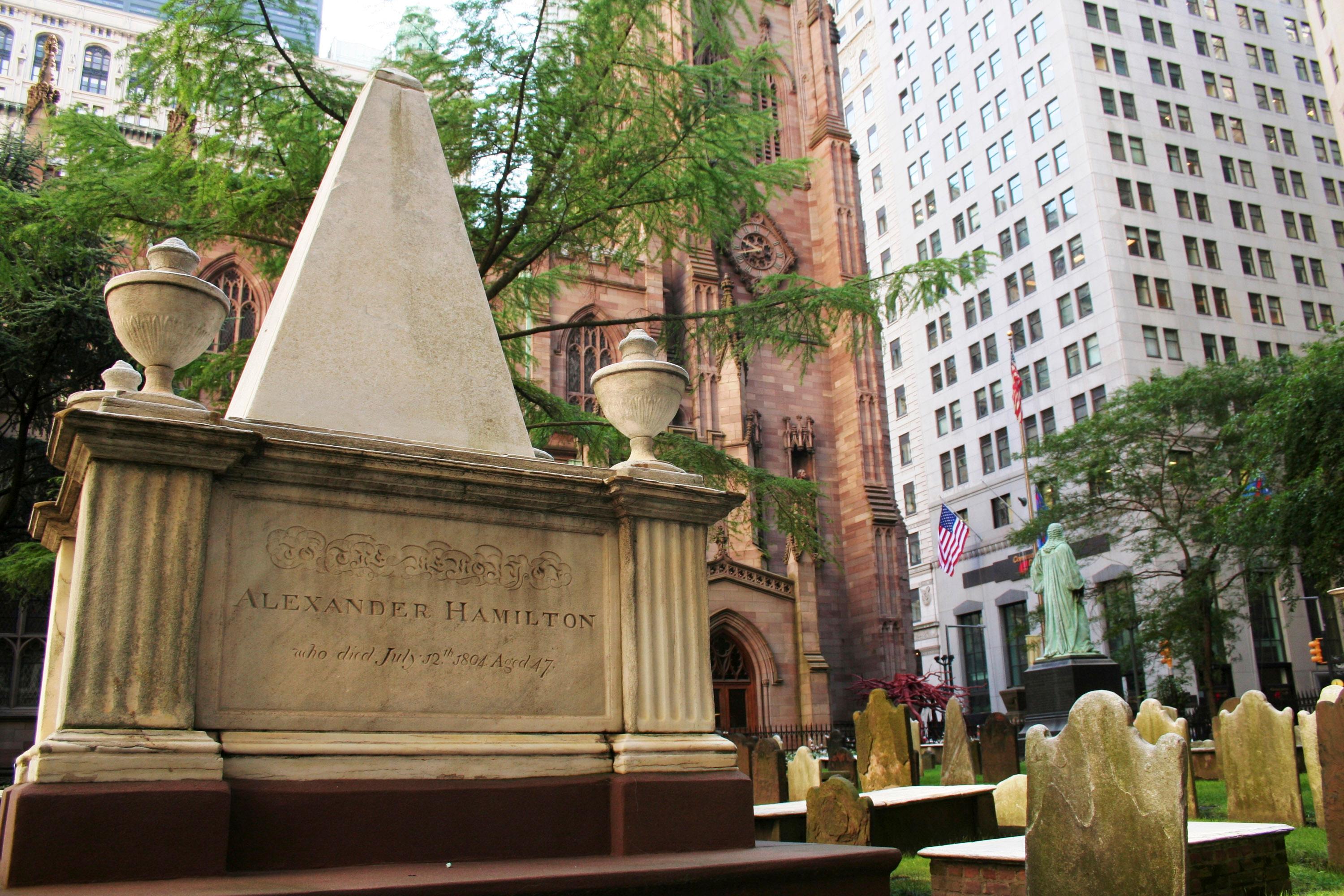
The Neo-Gothic Trinity Church buttresses the end of Wall Street. Before the construction of the Brooklyn Bridge, it was the tallest structure in New York City. Still an active Episcopal parish, it currently streams archive performances by the choirs and orchestras on its Facebook and Twitter pages. Adjacent to the church is James J. Walker Park, formerly St. John’s Cemetery, the burial site of Alexander Hamilton and other prominent figures of American history.

8
Outdoor Sculptures and Art
8
Lower Manhattan has plenty of outdoor art to behold. Across from the New York Stock Exchange building is Kristen Visbal’s 4-foot-tall bronze sculpture, Fearless Girl, installed just ahead of International Women’s Day in March 2017. The sculpture previously stood facing Arturo Di Modica’s famous Charging Bull sculpture at Bowling Green.
For lovers of abstract art, a visit to the Louise Nevelson Plaza is a must. The artist, who once caused a rift between Frida Kahlo and Diego Rivera as she was Rivera’s mistress, is the first artist to have a public place in New York named after her. Her sculptures were inspired by the firewood she once collected to keep warm in New York during the Great Depression. Zuccotti Park, decimated during the 9/11 attacks and a gathering spot for protestors during Occupy Wall Street, is the site of several public artworks, including the Joie de Vivre sculpture by Mark di Suvero.
9
Staten Island Ferry
9
South St.
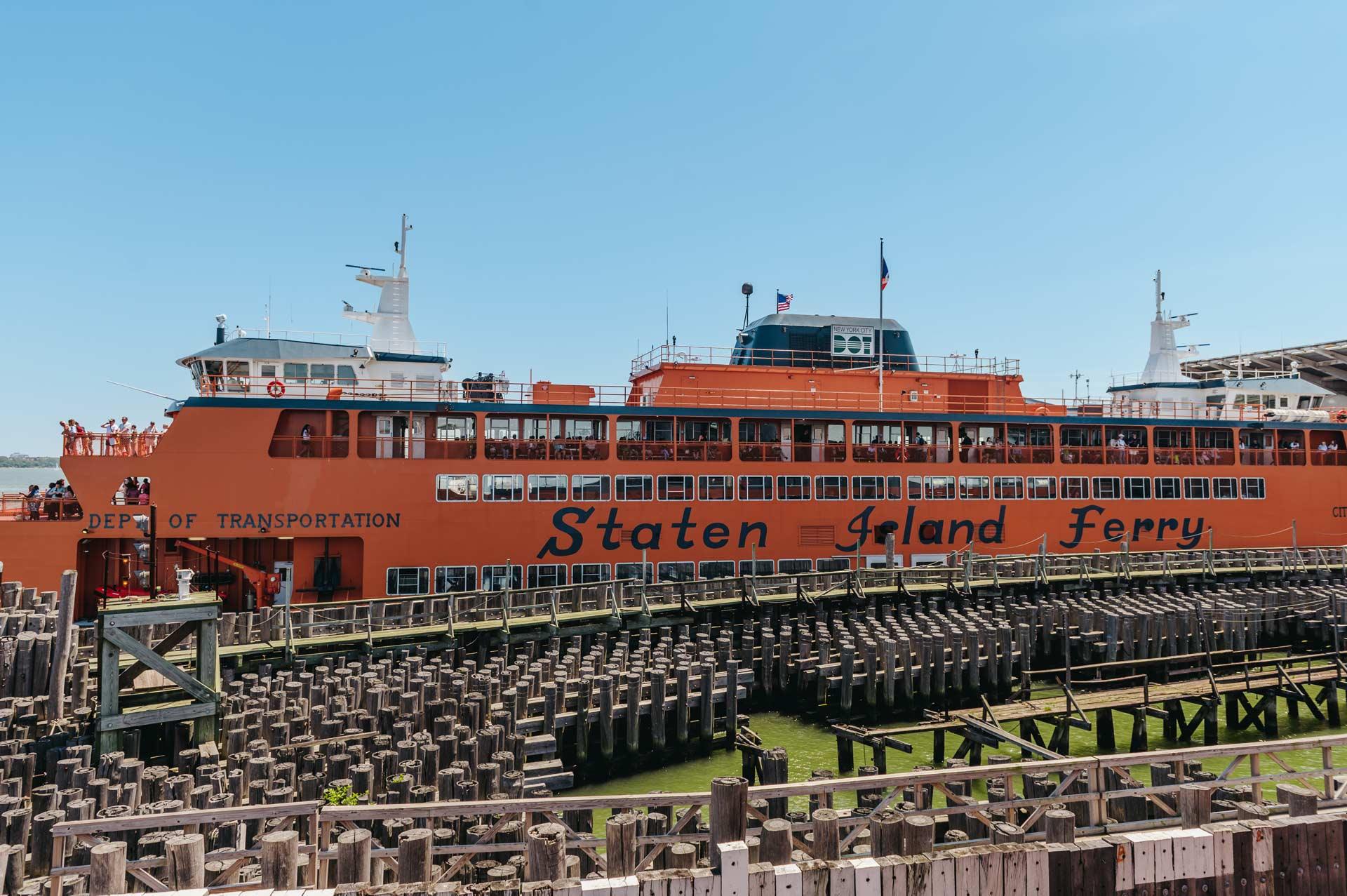
The Staten Island Ferry departs every 15 minutes during the week, and every 30 minutes on holidays and weekends, from the Whitehall Terminal on South Street in Manhattan. The free 25-minute journey takes visitors to Staten Island, past the Statue of Liberty, with views of the boroughs’ astonishing skylines in either direction. The ferry predates the City’s bridges and was once the only way to travel between boroughs. Many of the ferries in use exceed 300 feet in length, and during busy seasons, they transport about 70,000 people a day. Passengers can ride inside to keep warm or on the outside decks for better views. Food and alcohol are permitted and can be purchased at the terminal or on board.

10
One World Trade Center
10
285 Fulton St.
Colloquially referred to as the Freedom Tower, One World Trade Center is the sixth-tallest building in the world. It takes its name from the North Tower of the original World Trade Center, destroyed during the 9/11 attacks, and is the main building in the rebuilt World Trade Center complex, adjacent to the National September 11 Memorial & Museum. (For some Manhattanites, OWTC is simply the office, as is the case for Condé Nast employees.) Visitors can ascend the 102 stories via elevator to the Observatory, where you can learn about the development of New York City before the final reveal of the skyline from the tallest point in the western hemisphere.

11
National September 11 Memorial & Museum
11
180 Greenwich St.
The 9/11 Memorial honors those killed in the February 26, 1993, and September 11, 2001, terrorist attacks, as does the museum, which also documents the impact and historical significance of these events. The memorial is marked by two reflecting pools where the Twin Towers once stood, cascading waterfalls and a grove of swamp white oak trees. Names of victims are inscribed on bronze parapets around the pools. To find the memorial, head toward the unmissable Oculus Transportation Hub downtown, an enormous white steel structure that symbolizes a hand releasing a dove.
12
Dead Rabbit NYC
12
30 Water St.
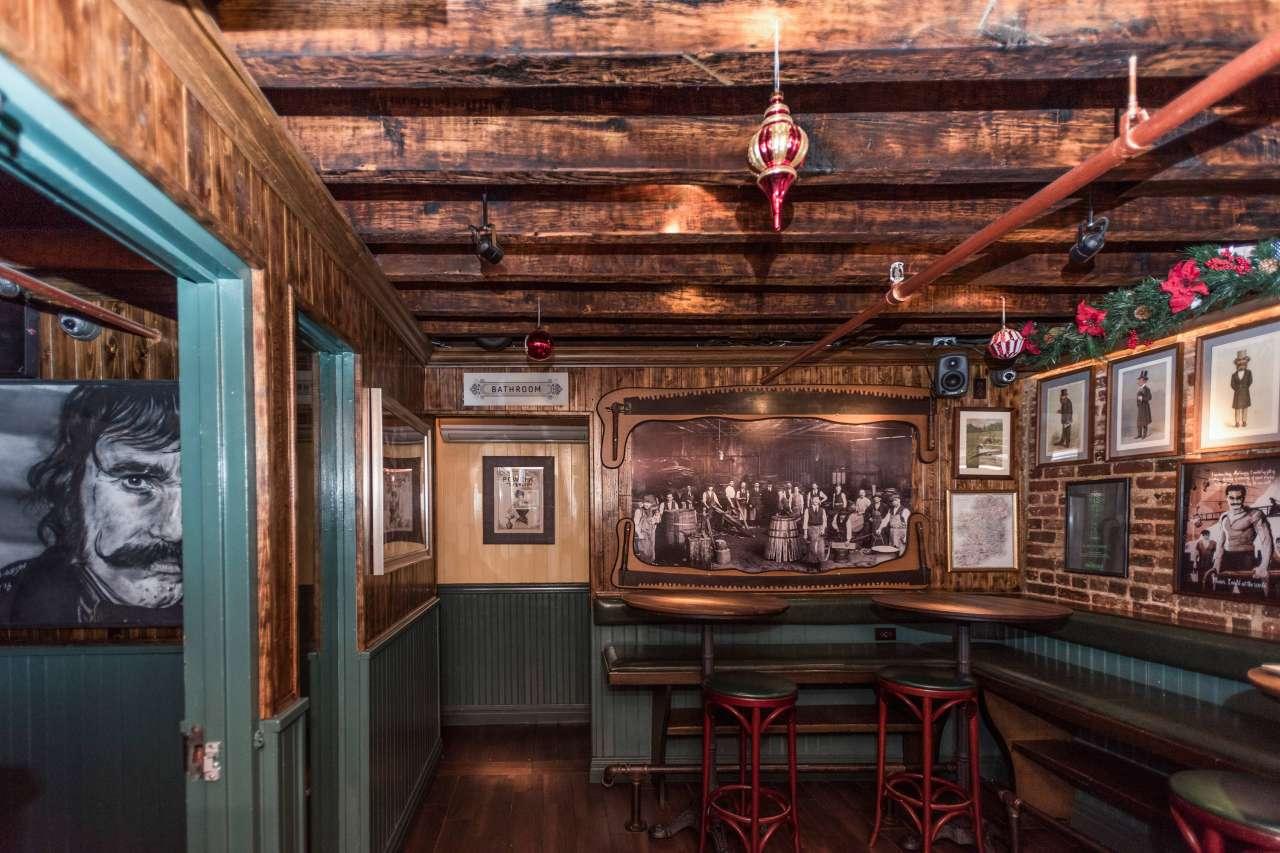
Modeled after a traditional Irish taproom, the Dead Rabbit is a world-renowned cocktail bar known for whiskey, Guinness and Irish coffee. We suggest wandering around Water Street or even onto the Staten Island Ferry with one of their to-go cocktails.
In from out of town? Explore Lower Manhattan accommodations on our hotels page.