This article is a companion piece to One Dish, our social series showcasing NYC chefs and their best-known dishes. This season is hosted by Justin Wu (@hungryartistny) who creates illustrations of his favorite NYC eats. Watch the video on our Instagram page.
For Maxi Lau, the path to opening a noodle shop began with a family tradition. Born in Hong Kong and raised on Long Island, Lau grew up eating wonton noodle soup with her family; her mother had hoped to open a Hong Kong–style noodle shop one day. After her mother’s passing, Lau began to think seriously about that dream—and whether she could bring the idea to life herself.
Lau eventually left the corporate world and traveled to Canada to train with a family friend, learning the techniques behind traditional Cantonese wontons and dumplings. She brought that knowledge back to New York City, first testing the noodle-shop concept as a pop-up before opening Maxi’s Noodle in downtown Flushing in 2019. The restaurant has since expanded to a second Flushing location and one in Manhattan.
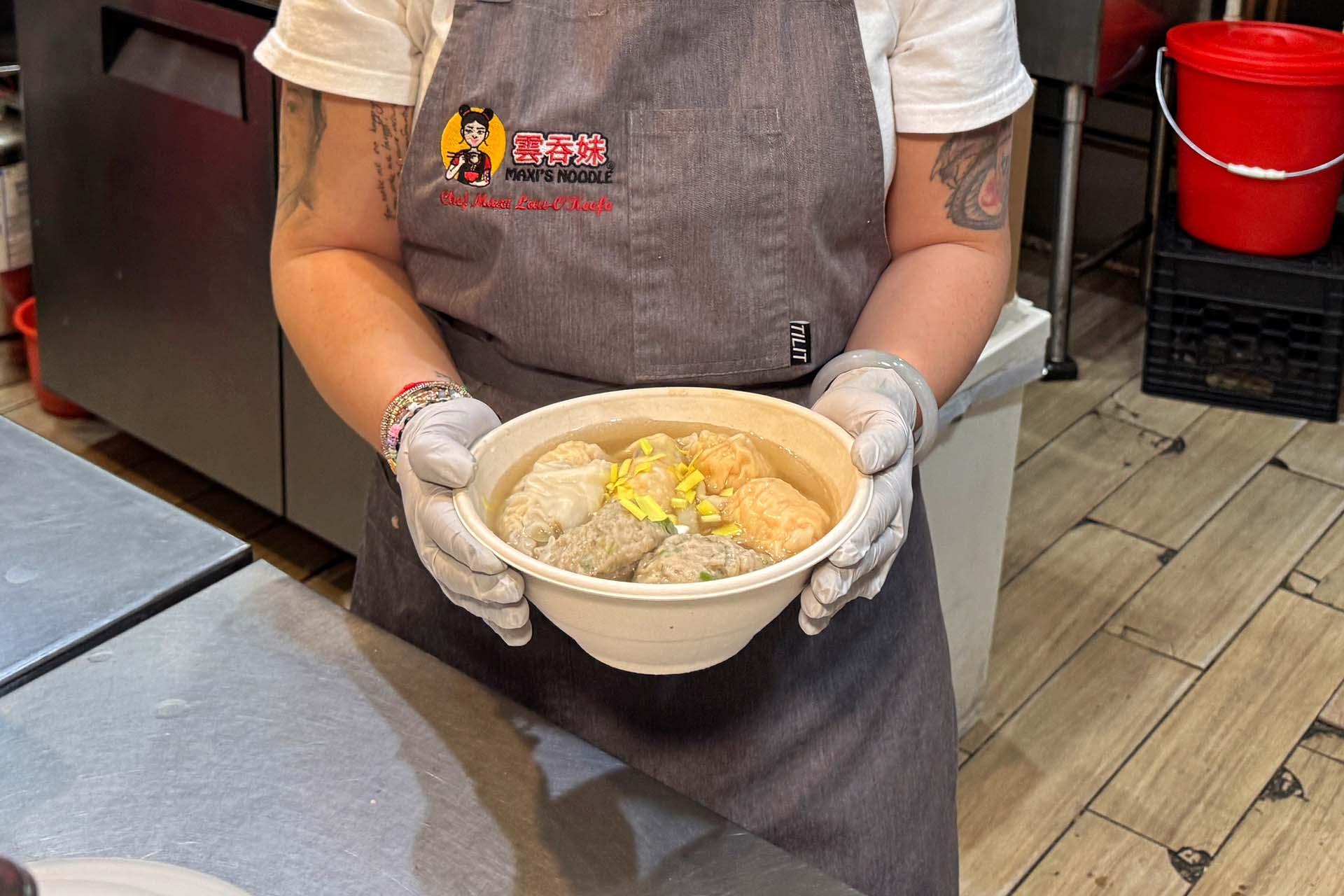
Her goal, however, remains simple: to make something that feels familiar, comforting and unmistakably like the Hong Kong noodle shops she remembers. We talked to Lau about her connection to her chosen dish for this series: wonton, dumpling and dace fish ball soup with duck egg noodles.

What does this dish mean to you personally, and how does it connect back to how you grew up eating?
Maxi Lau: In Hong Kong, wonton noodle soup isn’t just food; it’s part of everyday life. My family would eat this for breakfast, lunch or late at night. It reminds me of being a kid, sitting in small noodle shops with my family (the one we went to is called Mak Man Kee in Jordan, Hong Kong). So for me, this dish is really about family, comfort and home.
Your mother played a big role in inspiring Maxi’s Noodle. Does this dish reflect what she taught you or hoped to create?
ML: Yes, definitely. My mom showed her love through cooking. She never made just one dish. She always made multiple dishes so we could choose what we felt like eating. That idea stayed with me when I opened Maxi’s. I wanted customers to have that same feeling of choice and comfort.

What in this dish feels most true to the way you learned to cook?
ML: The techniques that are most important are the procedures it takes to make the fillings for the wontons and dumplings, along with the timing and ingredients used in the recipes. Consistency is the key to the entire operation. Those are the details I learned from my family and from my training—that small details make a big difference.
This dish brings together wontons, dumplings and dace fish balls. Can you talk about how those elements reflect Hong Kong or Cantonese noodle culture?
ML: In Hong Kong noodle culture, it’s very common to mix different items in one bowl: wontons, dumplings, fish balls and beef brisket. You can customize your bowl. Dace fish balls are very traditional in Cantonese cooking, especially in street food and noodle shops. So this bowl really represents Hong Kong style noodle shops, where you have variety, texture and different flavors [together].

When you were in training, what was the hardest part to get right? How did you land on the version you are serving today?
ML: The hardest part was consistency. Learning and training at my sifu’s (trainer) restaurant wasn’t the hardest part. It was coming back home to New York City and doing everything myself: making sure the broth tastes the same every day, making sure the wontons and dumplings are wrapped the same, cooked the same and that the noodles are cooked at the right time. It took a lot of practice and many adjustments over time. Sometimes ingredients run out, and I have to think quickly to find a substitute. If something is already working, I don’t want to change it, but in this business, problems come up and you just have to adapt and keep going.

You started in Flushing and now have a presence in Manhattan. Has being in NYC shaped how you think about serving this dish or introducing it to new audiences?
ML: Yes, because in New York you’re serving both people who grew up eating this and people who have never had it before. Being in NYC means you’re introducing Cantonese food and Hong Kong noodle culture to a wider audience, which is very important to me—sharing the love and culture through my food!
What’s the dining experience at like at Maxi’s?
ML: This is not fancy food; it’s everyday comfort food meant to be enjoyed with family and friends. The communal experience is about sharing food, sharing space and enjoying a simple but traditional meal together. When the shop gets busy, we ask customers to share tables. That’s the culture in Hong Kong, and we wanted to bring that same feeling here to Maxi’s.

When you eat this yourself, what are you usually drinking alongside it?
ML: Usually Hong Kong–style lemon tea. The tea is strong, and it’s the same tea we use for our milk tea. The tea is traditionally strained through a cloth bag, what we call a “silk stocking,” which is where the name 絲襪奶茶 (silk-stocking milk tea) comes from.
What do you hope someone, especially someone who grew up eating this dish, feels when they take their first taste?
ML: I hope it reminds them of home, especially for people from Hong Kong or Guangdong. I want them to take one bite and feel like they are back in a Hong Kong noodle shop.
Get to know more beloved dishes around the City and explore our One Dish series here!
